
For OEM engineers, sourcing teams, and R&D leaders, selecting the right illumination partner is no longer simply about purchasing a component—it is about securing long-term technical reliability, manufacturing consistency, and application expertise.
At LuxteL, we work closely with medical device manufacturers to engineer xenon lamp solutions optimized for the demanding realities of modern healthcare systems.
Why Xenon Technology Still Matters in 2026
Despite rapid advances in LED technology, xenon short arc lamps continue to offer unmatched advantages in high-performance medical illumination systems. Their intense white light, daylight-like spectral output, and superior optical coupling efficiency make them especially valuable in applications where image quality directly impacts clinical outcomes.
Medical systems utilizing xenon illumination benefit from:
- Exceptional brightness and intensity
- Broad-spectrum visible light output
- Stable color temperature
- High color rendering accuracy
- Efficient fiber optic transmission
- Consistent illumination over long operating cycles
These advantages remain particularly important in endoscopy, where physicians depend on precise tissue visualization during minimally invasive procedures.
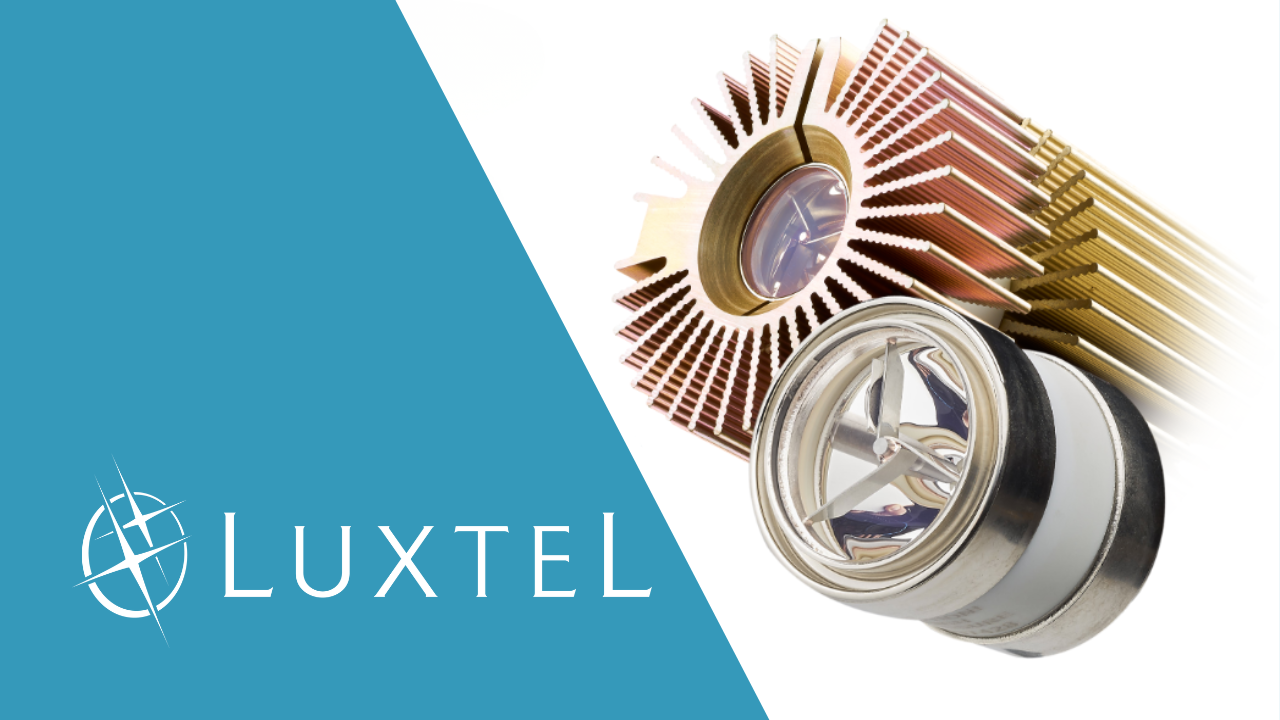
LuxteL’s CeraLux® xenon lamp platforms are designed to provide stable 5800°K color performance and high lumen consistency throughout operational life.
Engineering Performance Beyond the Lamp
In today’s medical device landscape, illumination performance depends on far more than bulb output alone. OEMs increasingly require integrated lamp module systems engineered for thermal management, optical precision, electrical stability, and long-term serviceability.
Optical Efficiency and Arc Stability
In advanced imaging systems, small fluctuations in arc alignment or reflector geometry can significantly impact image consistency and light delivery.
LuxteL engineers xenon lamp modules with precision reflector configurations and tightly controlled arc positioning to maximize optical efficiency while maintaining stable illumination performance across the system lifecycle.
This level of optical consistency is particularly important in:
- Surgical endoscopy
- Arthroscopy
- Microscopy
- Fiber optic light engines
- High-resolution camera systems
Thermal Management in Compact Medical Systems
As devices become smaller and more integrated, thermal management becomes increasingly critical. Xenon illumination systems generate substantial heat, requiring carefully engineered cooling and materials strategies to ensure operational stability.
Integrated thermal solutions help OEMs:
- Extend lamp life
- Reduce thermal stress
- Improve patient and operator safety
- Maintain consistent optical output
- Minimize unexpected downtime
LuxteL’s module designs incorporate advanced ceramic architectures and application-specific thermal engineering to support high-demand clinical environments.
Color Accuracy and Clinical Visualization
One of xenon technology’s defining strengths remains its near-daylight spectral quality. Accurate tissue differentiation is essential during diagnostic and surgical procedures, making high CRI performance a major advantage over many alternative illumination technologies.
For clinicians, illumination quality directly affects:
- Tissue contrast visibility
- Color fidelity
- Depth perception
- Diagnostic confidence
- Procedural precision
This is one reason xenon illumination continues to play a central role in many premium medical visualization systems even as LED adoption grows.
Reliability Is a System-Level Requirement
Medical OEMs increasingly evaluate illumination technologies not only for brightness, but for lifecycle reliability and field performance predictability.
In healthcare environments, unexpected illumination failure can create:
- Procedure delays
- Increased maintenance costs
- Service disruptions
- Equipment downtime
- Clinical workflow interruptions
Reliability in xenon lamp modules depends on precise manufacturing and rigorous quality control processes, including:
- Electrode integrity
- Arc gap consistency
- Reflector durability
- Ceramic seal performance
- Burn-in validation
- Optical alignment testing
At LuxteL, xenon lamp modules are manufactured in an ISO 13485-certified and FDA-registered U.S. facility designed specifically for high-performance medical illumination production.
For OEM partners, this level of manufacturing control supports both regulatory compliance and long-term product consistency.
Supply Chain Strategy Has Become a Competitive Advantage
In 2026, supply chain resilience remains one of the most important considerations for medical device manufacturers. Illumination systems require specialized materials, precision manufacturing, and stable sourcing relationships—all of which can impact production continuity.
OEM sourcing teams are increasingly prioritizing partners that offer:
Domestic Manufacturing Capabilities
U.S.-based manufacturing helps reduce:
- International logistics risks
- Extended lead times
- Communication delays
- Supply chain disruptions
LuxteL operates a 40,000-square-foot manufacturing facility in Jacksonville, Florida, enabling responsive production support and rapid customer engagement.
Long-Term Product Availability
Many healthcare systems continue operating installed equipment for years beyond original product launch cycles. OEMs and service organizations require dependable replacement module availability and compatibility support to extend system life.
LuxteL supports a broad range of legacy and current-generation medical illumination platforms through extensive cross-reference and replacement module programs.
Technical Partnership and Application Support
Medical device development increasingly requires collaborative engineering support rather than transactional component sourcing.
OEM engineering teams benefit from partners capable of assisting with:
- Optical optimization
- Thermal integration
- Mechanical compatibility
- Regulatory considerations
- Prototype development
- Lifecycle planning
This collaborative approach reduces development risk while accelerating time-to-market for next-generation systems.
The Future of Medical Xenon Illumination
While illumination technologies continue to evolve, xenon lamp systems remain indispensable for many high-performance medical applications requiring:
- Extremely high luminance
- Superior spectral quality
- Long-distance fiber transmission
- Precision visualization
- Clinical-grade color rendering
For OEMs developing advanced medical imaging systems in 2026 and beyond, illumination strategy remains a critical engineering decision—not simply a component selection exercise.
At LuxteL, we continue to support medical OEMs with engineered xenon illumination solutions focused on performance, reliability, manufacturability, and long-term supply continuity.
As the medical device industry advances toward increasingly compact, precise, and integrated imaging technologies, the role of high-performance illumination remains as important as ever.